By: Marshall Bursis
Elections are not merely the mechanism by which we allocate political power. We derive meaning from their outcomes. They are historical markers that we use to inform our understanding of the past—and the present.
In our collective historical memory, the landslide elections of 1932 and 1980 denote the beginning of the New Deal and Reagan Revolution, respectively. The mass media campaign of the 1960 presidential election—including its historic televised debates—signals the transition from one era in American life to another. The election of Barack Obama in 2008, some mistakenly thought then, indicated that the country was a “post-racial” society.
More recently, many commentators have attempted to make some meaning of the 2016 election. Writers have characterized its results as a referendum on globalization, elitism, immigration, and white identity politics. More than just endless debates for cable news pundits, these narratives informed policy decisions and campaign strategies, in particular driving discussions of “electability” in the 2020 Democratic Primary.
We look to elections to construct our perceptions of our country and ourselves.
Right now, that meaning is actively being contested. Some, citing Biden’s large popular vote share and employing the lens of incumbency, have described the election as a clear rejection of Trump. Others, focused on split-ticket votes, have emphasized Joe Biden’s unique ability among democrats to cater to conservative voters, even in a year Republicans fared well in down ballot races.
Representative Alexandria Ocasio-Cortez, worried by Democratic defeats in the House and Senate, has blamed her party’s moderate coalition for failing to embrace progressive policies and mismanaging campaign resources. In response, Representative Conor Lamb critiqued Ocasio-Cortez and her allies for promoting policies that, he believes, hurt Democratic candidates in swing districts.
These disputes will likely remain unsettled in 2021, and activists in both parties will further litigate these issues in the 2022 midterms. Clearer, though, is the transformative impact of this election’s historic turnout on politics and its salience in our culture. A legacy of this election and of the Trump era might be the return of mass participatory democracy
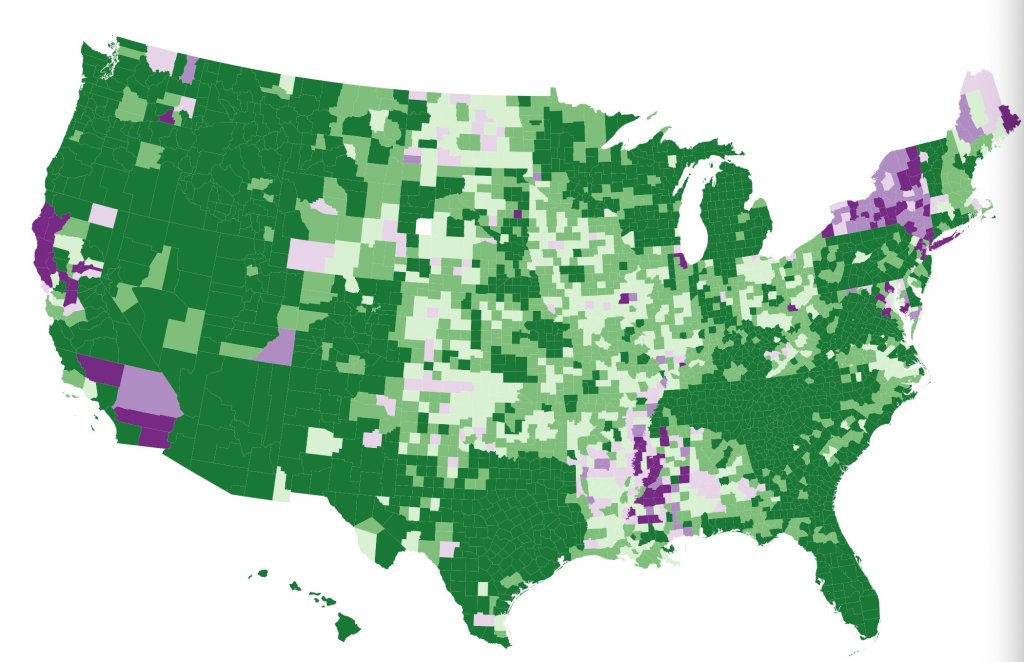
Turnout was up just about everywhere. So far, there has been a 13.4 percent increase in raw votes cast relative to 2016. According to early estimates from Dr. Michael McDonald at the Elections Project, turnout as a percentage of the voting eligible population in 2020 was 66.4 percent—the largest turnout since 1900.
Trump has refocused our attention on politics in profoundly consequential ways. The 2018 midterms, like 2020, saw historic voter participation, with the largest turnout in a midterm election in 104 years. Beyond voting statistics and turnout percentages, people care about politics more deeply than they have in recent memory.
After media outlets began to project Biden the president-elect, cities across the country erupted in spontaneous street celebrations. Some writers have compared the euphoric scenes in New York City to the celebrations that followed news of Japan’s surrender in World War II. Almost four years earlier, the day after President Trump’s inauguration, the Women’s March became the largest single day of protest in American history.

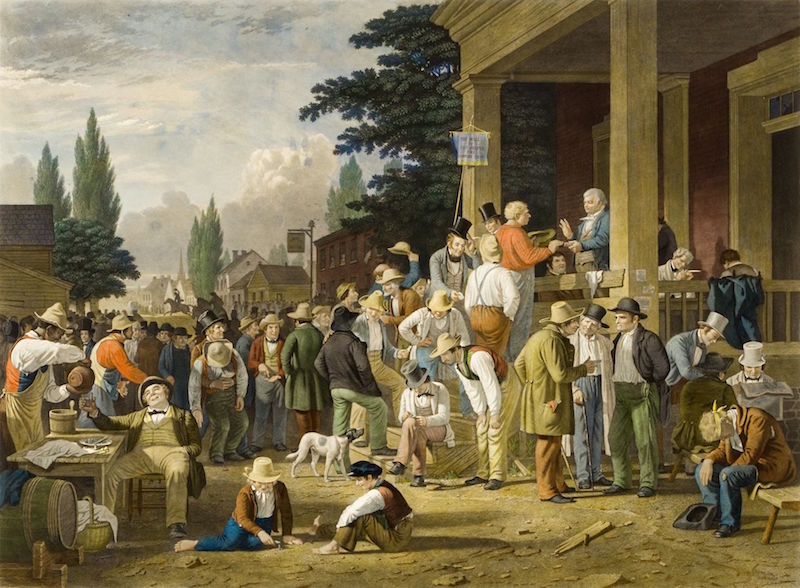
The closest analogue for this democratic ethos is the cacophonous world of Jacksonian politics that Alexis de Tocqueville described in his seminal Democracy in America. In that period, presidential elections became, Tocqueville wrote, “the most important and the all-engrossing topic of discussion.” “The whole nation,” Tocqueville observed, “glows with feverish excitement; the election is the daily theme of the public papers, the subject of private conversation, the end of every thought and every action, the sole interest of the present.”
For Tocqueville, this national passion was a cyclical crisis—like a river that floods quadrennially. Despite the intensity of the election campaign, in Tocqueville’s America, the river of democratic politics receded and “a calmer season returns.” In many ways, Joe Biden campaigned on a return to a calmer season of unity and bipartisanship, on a return to normalcy. However, this heightened level of political salience seems to be the new normal.
Hyper-polarization and historic engagement threaten to prevent the ebb of American democracy’s river. The outgoing President continues to contest the results of the election. His most ardent supporters have gathered in the nation’s capital to demonstrate their continued loyalty. Tocqueville lamented that during the presidential campaign “the citizens are divided into hostile camps, each of which assumes the name of its favorite candidate.” For us, this seasonal flood may endure.
 New Frontier