By: Marshall Bursis
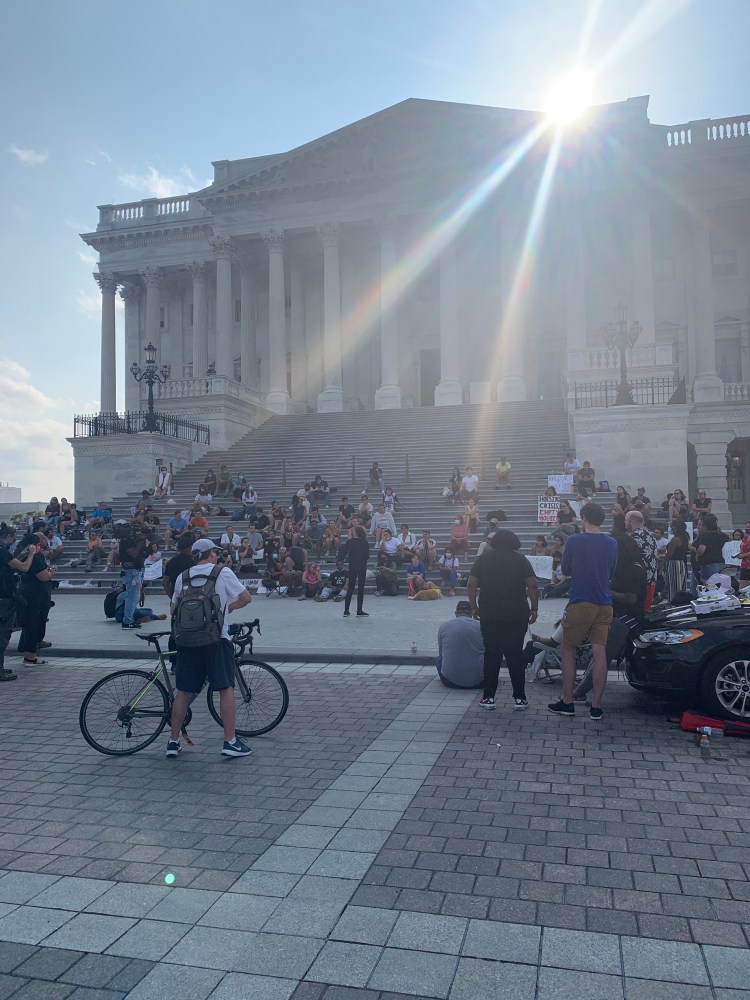
On July 31, after a forty-eight hour, interbranch staring contest between Congress and the White House, the eviction moratorium expired. Initially, citing Justice Kavanaugh’s three-sentence concurrence upholding the CDC’s moratorium but signaling the Court’s skepticism of the agency’s power to extend the order without new legislation, the Biden administration demurred, insisting that only Congress could act. After public pressure from progressives and protest on the steps of the Capitol led by Rep. Cori Bush, the White House issued a new, narrower order applying only to areas with “substantial or high” levels of COVID-19 transmission, currently affecting nearly 80% of U.S. counties.
The editorial boards of both The Wall Street Journal and The Washington Post have written against the move. The Journal attacked the order as “premeditated lawlessness”—one that, because of Justice Kavanaugh’s warning that an agency extension would be unconstitutional, the administration “can’t defend in good faith.” The Post’s criticism was similarly sharp, writing that the temporary relief to renters came “at the expense of the rule of law.” Subsequently, Biden defended the order, saying “I think it is [constitutional],” but adding that “in this court, who knows.”
Others joined the chorus of condemnation, too. Writing before the extension, Vox correspondent Ian Millhiser cautioned proponents of the moratorium that any extension from the CDC would be to “openly defy the Supreme Court.” Harvard Law professor Noah Feldman likewise wrote that the administration’s new order was “bad for the rule of law, whatever technical argument can be made that it isn’t absolutely lawless.”
These assessments ignore the history of departmentalism (the view that each branch is empowered to furnish its own independent view of an act’s constitutionality) and the important and legitimizing role of the Court’s comprehensive written opinions—something missing in Justice Kavanaugh’s curt concurrence.
To be sure, departmentalism is not without its problems. Most recently, it served as the intellectual fig leaf for racist, segregationist governors and state legislatures resisting the Court’s decision in Brown v. Board of Education (1954). In Cooper v. Aaron (1958), the Court rejected that theory of co-ordinate review, writing that “the federal judiciary is supreme in the exposition of the law of the Constitution.” Willfully defying the rulings of the Court would be “war against the Constitution.” In this context, departmentalism appears to be a prescription for unchecked lawlessness.
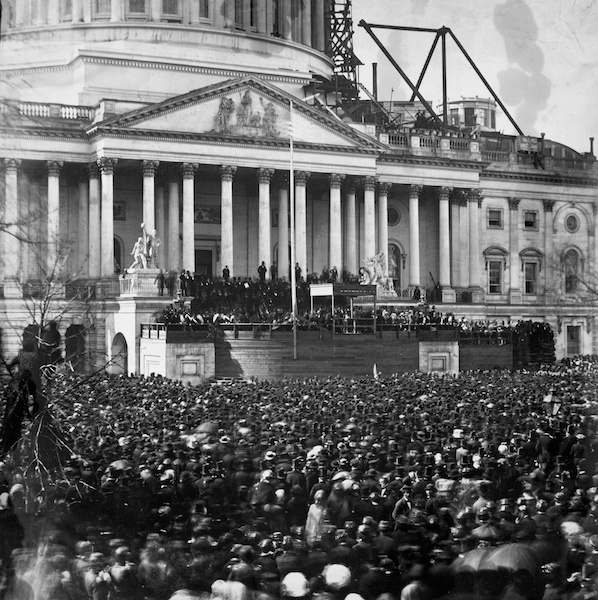
Yet, this recent co-option obscures departmentalism’s intellectual roots. Lincoln, faced with the awfulness and wrongness of the Dred Scott decision, advocated for the moral and legal urgency to reverse bad law. “We think the Dred Scott decision is erroneous,” Lincoln told an audience in 1857. “We shall do what we can to have [the Court] to over-rule this.” In his first inaugural, Lincoln summarized the consequences of judicial supremacy in divided matters of law:
The candid citizen must confess that if the policy of the Government upon vital questions affecting the whole people is to be irrevocably fixed by decisions of the Supreme Court, the instant they are made in ordinary litigation between parties in personal actions the people will have ceased to be their own rulers, having to that extent practically resigned their Government into the hands of that eminent tribunal.
Importantly, though, Lincoln’s departmentalism was not without bounds. He argued that resistance to what he considered “settled law” was extralegal and “revolutionary.” But, he reasoned, “judicial decisions are of greater or less authority as precedents, according to circumstances” (emphasis added). Some of these limiting principles for Lincoln are unanimity, apparent partisan bias, congruence with public opinion, and continued reaffirmation over time.
I would add another ‘circumstance’ to Lincoln’s framework—the absence of clear judicial reasoning.
Supreme Court justices are sometimes cynically viewed as simply ideological political actors analogous to Congress and the President. But this increasingly common contemporary view is not entirely accurate. Through its opinions, the Court must ground its rulings in precedent and law. Ipse dixit does not govern in our constitutional system. The plurality opinion in Planned Parenthood v. Casey (1992) recognizes this fact. “The Court must take care to speak and act in ways that allow people to accept its decisions,” Justices O’Connor, Kennedy, and Souter wrote (emphasis added). “A decision without principled justification would be no judicial act at all.” In Justice Scalia’s famous dissent in Morrison v. Olson (1988), he denounced the majority for “simply announc[ing], with no analysis,” its belief that control of the Special Counsel’s office is not central to the functioning of the executive branch. “Apparently that is so because we say it is so,” Scalia derided. “A government of laws means a government of rules,” he wrote. “Today’s decision on the basic issue of fragmentation of executive power is ungoverned by rule, and hence ungoverned by law.”
Law professor Adam Winkler argued in The New York Times that the Court “had an obligation to articulate what was wrong with the regulation so that officials could seek other, more clearly lawful ways of preventing the spread of Covid.” The Justices, he contended, “owe the nation more of an explanation.” Justice Kavanaugh and the Court’s conservatives should explain why, in their view, the CDC’s eviction moratorium “exceeded its existing statutory authority.” To fail to do so is to leave the White House and the CDC “adrift in a sea of legal uncertainty,” according to Winkler. Was the original order overly broad? Do the continued difficulties distributing rental assistance justify a temporary extension? The Court must guide the White House.
The Supreme Court not only rules on specific cases; it also instructs. It informs public officials of the bounds of their power, and it educates citizens on the rights and responsibilities of self-government. Political Scientist Ralph Lerner has argued that “teaching is inseparable from judging in a democratic regime.” It is not contrary to Biden’s oath to the Constitution to challenge the Court to justify its ruling before abandoning what he considers a constitutional and potentially life-saving emergency measure.
 New Frontier